

Choosing the right makeup for scars depends on whether you are trying to cover discoloration, uneven texture, or both. A highly pigmented scar concealer can help camouflage redness and color differences, while recessed or indented scars may need a topical filler to temporarily smooth the appearance of the skin before makeup.
The key is using the right product for the type of scar and applying it in thin, well-blended layers. Below, we break down the products, tools and techniques that can help create more natural-looking scar coverage.
What You Need to Cover Scars With Makeup
As with all types of makeup, great results come from the right combination of products and tools. Here’s what you’ll need for the ultimate camouflage makeup kit:
Full-Coverage Concealer
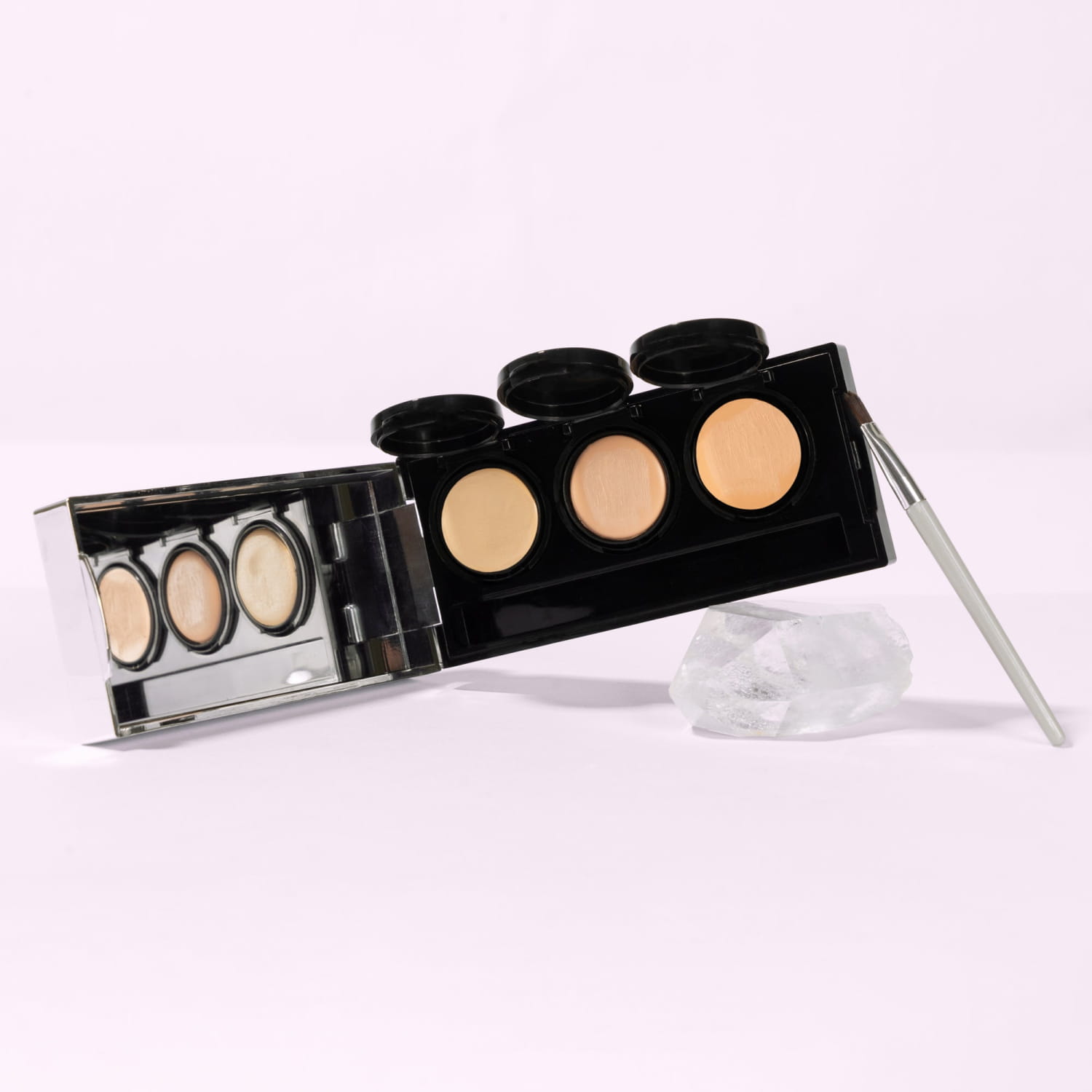
Unlike makeup you’d use to cover dark circles under your eyes, scar concealers are usually super-pigmented, to block the discoloration of the scar without smearing or caking. You get opaque, long-lasting coverage, but you need to take care to match your skin exactly or go with blendable colors like Behind the Scenes Concealer Palette which include 3 shades to mix & layer. Choose from the Light, Medium, Tan or Dark Palette.
Concealer Brush
Brushes make the difference in blending and lasting power of scar makeup. Your fingers may add oil and change the texture of the concealer, making it harder to blend and less lasting. A small, fine-tipped concealer brush or pointy lip brush will let you dab precise coverage directly onto the scar or mark.
Sheer-to-Medium Coverage Foundation or BB Cream
Use a lightweight foundation or BB cream to even the overall skin tone before applying targeted scar coverage. Build coverage gradually rather than applying a heavy layer across the entire face, which can make texture more noticeable.
A Foundation Brush or Makeup Sponge.
A soft foundation brush or damp makeup sponge can help blend foundation evenly without disturbing concealer or filler applied to targeted areas.
Loose Translucent or Mineral Powder.
If your concealer requires setting, lightly press a translucent or mineral powder over the area rather than rubbing it across the skin. A mineral powder with SPF can provide additional cosmetic coverage, although it should not replace your regular sun protection.

Powder Puff or Fluffy Powder Brush
A brush that’s too stiff may disrupt or rub off some of your concealer or foundation, undoing your hard work.
Concealer vs. Topical Filler: Which Is Better for Your Scar?
Scar concealer is best when the main concern is color. It can help camouflage redness, dark marks or visible discoloration while blending the scar with the surrounding skin.
For flat or discolored scars, explore our makeup to cover scars, including highly pigmented concealer options.
Topical filler is designed for recessed or indented scars where texture is the main concern. Instead of only changing the color, it temporarily fills the indentation to create a smoother-looking surface.
For recessed scars, a topical filler for recessed scars may be more appropriate when texture is the main concern.
For scars with both texture and discoloration, you may use topical filler first and then add concealer only where additional color correction is needed.
How to Match Makeup to Different Scar Types
Color is everything when it comes to creating your perfect canvas with makeup for scars. Many of today’s beauty brands offer a wide spectrum of shades for their concealer and foundation products. If you’re lucky, you’ll find an exact match for your skin’s color and undertones, but many people need to mix two or more shades to get it just right.
Here are the expert tips to finding your perfect match:
- The right foundation shade will disappear into your skin. Don’t try to go lighter or darker in an attempt to cover up scars – that’s your concealer’s job.
- The best approach depends on whether the scar differs mainly in color, texture, or both.
- Flat or discolored scars: Choose a concealer that closely matches your natural skin tone. Apply thin layers over the discoloration and blend the edges into the surrounding skin.
- Raised scars: Makeup can help reduce visible color contrast, but it cannot flatten raised scar tissue. Use light layers of a close skin-tone match so excess product does not emphasize the texture.
- Recessed or indented scars: Concealer can help with discoloration, but it does not fill an indentation. When texture is the main concern, a topical filler can temporarily smooth the appearance of the recessed area before additional makeup is applied if needed.
- Scars with both texture and discoloration: Address the texture first with a topical filler, then use a small amount of concealer only where additional color correction is needed.
How to Cover Scars With Makeup in 3 Steps
1. Prep the Skin
Start with clean, dry skin. If you use skincare beforehand, allow it to absorb fully so the area where makeup or filler will be applied is not overly oily.
2. Apply the Right Type of Coverage
For discoloration, pat a small amount of concealer directly over the scar and build coverage in thin layers. For recessed scars where texture is the main concern, apply topical filler first according to the product directions.
3. Blend and Set
Feather the edges into the surrounding skin for a natural-looking finish. If the concealer requires setting, lightly press powder over the area instead of rubbing across it.
Expert Tip: Makeup applies more evenly to clean, smooth skin. Avoid applying heavy oils directly over the area immediately before scar makeup, as this can make some formulas harder to set or blend.
Want to explore products used for scar coverage? Click the image below to shop makeup for scar
Practice Makes Perfect
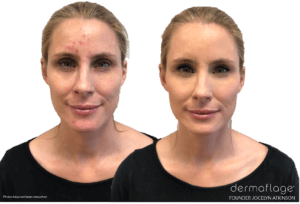
Scar coverage usually takes a little practice, especially when matching shades or working with uneven texture. Test your routine before an important event and allow each product to dry or set before adding another layer or getting dressed.
Explore Dermaflage Makeup for Scars
Different scars need different types of cosmetic coverage. Dermaflage offers highly pigmented concealers for visible discoloration, topical filler for recessed or indented scars, and complementary complexion products for a more even-looking finish.
Shop makeup to cover scars to find the option that best matches your scar type and coverage needs.
For discoloration and flat scars, explore the Pro Concealer Palette.
FAQs
What makeup is best for covering scars?
For flat or discolored scars, a highly pigmented concealer can help reduce visible color contrast. Recessed scars may benefit from a topical filler that temporarily smooths the indentation.
Can concealer hide indented acne scars?
Concealer can help with redness or discoloration, but it does not change the texture of an indented scar. A topical filler may be more appropriate when the main concern is uneven texture.
Should I apply foundation before or after scar concealer?
A light layer of foundation can help even the overall skin tone first. Apply scar concealer afterward only where additional coverage is needed, then carefully blend the edges into the surrounding skin. For recessed scars, topical filler should be applied according to its product instructions before adding additional complexion makeup.
-
Recent Blogs


